
Last Updated on October 20, 2026
Silane and siloxane sealers, siliconates, and silicates are common types of penetrating concrete sealers. Unlike acrylic and epoxy coatings, which form a protective film on the surface, penetrating sealers absorb into the concrete and provide protection within its pores.
If you’re looking for the best penetrating concrete sealer for your driveway, patio, or garage floor, you’ve come to the right place. These sealers can help reduce water absorption, protect against freeze-thaw damage, and maintain your concrete’s natural appearance.
However, different penetrating sealers work in different ways. Silane, siloxane, and siliconate products primarily provide water repellency, while silicate sealers react with concrete to densify and harden the surface.
In these Best Penetrating Concrete Sealer Reviews 2026, I’ll compare three popular products, explain their benefits, and help you choose the right one for your project.
Who Should Use a Penetrating Concrete Sealer?
A penetrating sealer is a good choice if you want to:
- Reduce water absorption without creating a glossy coating.
- Protect concrete against deicing salts and freeze-thaw damage.
- Help reduce moisture-related scaling, pitting, and spalling.
- Limit efflorescence and moisture-related mold or mildew growth.
- Maintain the original color and texture of concrete.
- Make outdoor concrete easier to maintain.
These sealers are especially useful for:
- Concrete driveways and sidewalks.
- Garage and basement floors.
- Patios and walkways.
- Pool decks.
- Concrete pavers and compatible masonry surfaces.
Penetrating sealers are particularly attractive to homeowners who prefer a natural, non-glossy finish. However, they cannot repair existing cracks or make structurally damaged concrete waterproof.
Top-Rated Best Penetrating Concrete Sealer Comparison Table
| Images | Penetrating Concrete Sealer | Price Idea |
|---|---|---|
 Check Price | 5-Gal. SX5000 Penetrating Clear Solvent-Based Silane-Siloxane Concrete & Masonry Sealer, Water Repellent, Salt Guard Read Review | Medium |
 Check Price | PS101 Siliconate Multi-Surface (Smooth) WB Penetrating Sealer (5 gal.) Read Review | Medium |
 Check Price | Siloxa-Tek 8500 - 1 Gallon Penetrating Concrete Sealer, Water and Salt Repellent Read Review | Lowest |
Choosing the best penetrating concrete sealer depends on the concrete’s condition, porosity, exposure to weather, and the type of protection you need.
For example, a silane/siloxane sealer is often suitable for exterior concrete exposed to rain and deicing salts. A siliconate product may work well on uncolored concrete floors and driveways.
If you prefer a shiny decorative finish instead, explore our concrete sealer reviews for additional options.
Benefits of Using a Penetrating Concrete Sealer
A quality penetrating sealer can help preserve concrete without creating a thick surface coating.
- Freeze-thaw protection: Reduces moisture absorption that can contribute to cracking, scaling, and spalling during repeated freezing and thawing.
- Deicing salt resistance: Suitable water-repellent sealers help limit chloride penetration.
- Natural appearance: Most products dry clear without creating a glossy finish.
- Reduced moisture penetration: Helps protect concrete from rain and surface water.
- Lower maintenance: Treated concrete is often easier to clean.
- Longer service life: Proper sealing can reduce certain moisture-related problems and help extend concrete durability.
- Preserved surface texture: Most penetrating water repellents do not form a slippery film.
Unlike topical coatings that may peel or wear away, penetrating sealers provide protection below the surface. However, performance gradually decreases with weather exposure and concrete wear.
Top 3 Best Penetrating Concrete Sealer Reviews 2026
After comparing product formulations, application requirements, coverage rates, and manufacturer specifications, I’ve selected three penetrating concrete sealers worth considering in 2026.
All three are designed to preserve the natural appearance of compatible concrete, but they differ in their formulas and application requirements.
1. Foundation Armor SX5000 Penetrating Sealer
The Foundation Armor SX5000 is a professional-grade, solvent-based silane/siloxane penetrating sealer designed to protect concrete and masonry against moisture-related deterioration.
It penetrates concrete and forms a water-repellent barrier within its pores. This helps reduce damage caused by rain, deicing salts, and repeated freeze-thaw cycles.
One of its biggest advantages is that it maintains the concrete’s natural appearance. Unlike decorative acrylic sealers, SX5000 does not create a glossy coating or noticeably darken the surface when properly applied.
Foundation Armor recommends SX5000 for suitable concrete, pavers, brick, masonry, and certain natural stone surfaces.
According to its technical specifications, SX5000 provides approximately 7 to 10 years of protection before recoating may be necessary, depending on exposure and maintenance.
| Sealer Type: | Solvent-based silane/siloxane |
| Suitable Surfaces: | Concrete, pavers, brick, and compatible masonry |
| Finish: | Clear, natural appearance |
| Coverage: | Up to 175 sq. ft./gallon on porous surfaces; up to 200–225 sq. ft./gallon on properly prepared smooth surfaces, per coat |
| Typical Service Life: | Approximately 7–10 years |
| Application Temperature: | 55°F–85°F |
| Foot Traffic: | Approximately 8–12 hours |
| Vehicle Traffic: | Approximately 24–48 hours |
| Price: |  Check Price |
For the best results, apply the product to clean, unsealed concrete using the recommended equipment. Two coats are suggested for even coverage.
Pros:
- Provides excellent water repellency.
- Helps reduce freeze-thaw and deicing salt damage.
- Maintains the concrete’s natural appearance and texture.
- Suitable for interior and exterior applications.
- Helps reduce moisture-related staining and efflorescence.
- Offers long-lasting protection when properly applied.
Cons:
- Solvent-based formula produces noticeable fumes.
- Requires protective equipment and suitable ventilation.
- Coverage is lower on highly porous concrete.
- Improper application can leave unwanted residue or discoloration.
Bottom line: Foundation Armor SX5000 is a strong choice for homeowners who want long-term moisture protection without changing the concrete’s appearance.
Related: Best Driveway Sealer Buying Guide
2. PS101 Siliconate Multi-Surface WB Penetrating Sealer
The PS101 Siliconate Penetrating Sealer from Concrete Sealers USA is another excellent option for protecting unsealed, uncolored concrete.
This water-based siliconate sealer reacts within the concrete pores to create a water-repellent barrier. It helps reduce moisture absorption, scaling, spalling, and damage associated with deicing chemicals.
PS101 is particularly suitable for broom-finished and smooth-troweled concrete surfaces. It can be used on driveways, sidewalks, garage floors, basements, patios, and other compatible masonry surfaces.
Unlike acrylic coatings, PS101 does not create a shiny finish. Once dry, the concrete generally retains its original appearance.
The manufacturer also identifies PS101 as a zero-VOC, water-based formulation, making it a practical alternative for homeowners who want to avoid solvent-based products.
| Material: | Siliconate |
| Formula: | Water-based, zero VOC |
| Finish: | Flat, clear, natural appearance |
| Water Resistance: | Water repellent |
| Drying Time: | 1–3 hours to touch; approximately 6–12 hours before traffic |
| Coverage: |
|
| Shelf Life: | Approximately 2 years unopened when stored correctly |
| Price: |  Check Price |
PS101 is intended for porous concrete and masonry, but it is not recommended for asphalt, previously sealed surfaces, or applications where oil repellency is required.
The manufacturer recommends testing concrete porosity before application. Excessive product may leave a white residue, particularly on darker surfaces.
Pros:
- Water-based formula with zero VOC.
- Provides effective water repellency.
- Helps reduce scaling, spalling, and freeze-thaw damage.
- Suitable for smooth and broom-finished concrete.
- Maintains the natural appearance of the surface.
- Relatively quick drying under suitable conditions.
- Easy to apply using a suitable low-pressure sprayer.
Cons:
- Not intended to repel oil or grease.
- Cannot be applied over incompatible existing coatings.
- Excessive application can cause white residue.
- Not suitable for repairing cracks or below-grade waterproofing.
Bottom line: PS101 is a practical choice for homeowners who want a water-based penetrating sealer for uncolored concrete driveways, garage floors, and sidewalks.
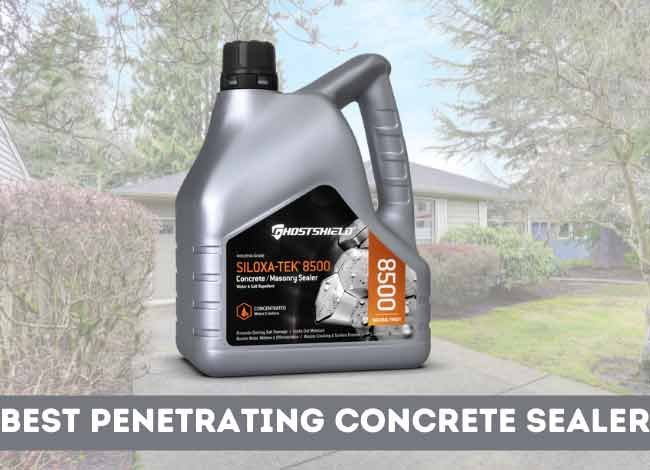
3. Ghostshield Siloxa-Tek 8500 Penetrating Concrete Sealer
The Ghostshield Siloxa-Tek 8500 is another professional-grade penetrating concrete sealer designed to provide water and deicing salt resistance.
This water-based product contains a silane/siloxane blend that penetrates concrete and creates a hydrophobic barrier beneath the surface.
It is suitable for several concrete and masonry applications, including driveways, sidewalks, patios, pool decks, garages, brick, and compatible natural stone.
One of its main advantages is that it dries nearly invisible. Your concrete retains its natural appearance without developing a glossy coating.
Ghostshield offers Siloxa-Tek 8500 in ready-to-use and concentrated versions. The ready-to-use formula covers up to approximately 250 square feet per gallon per coat.
The concentrated version must be diluted according to the manufacturer’s instructions before application.
| Material: | Silane/siloxane |
| Formula: | Water-based |
| Color: | Clear |
| Finish: | Natural, invisible |
| Suitable Surfaces: | Concrete, brick, masonry, pavers, and compatible stone |
| Water Resistance: | Water repellent |
| Application: | Low-pressure sprayer, roller, or brush |
| Approximate Coverage: | Up to 250 sq. ft./gallon per coat for ready-to-use formula |
| Price: |  Check Price |
Siloxa-Tek 8500 is designed to reduce water and chloride penetration without forming a surface film. It is particularly useful in areas exposed to rain, snow, and deicing chemicals.
However, this specific formula is not intended to provide strong oil and grease repellency. Ghostshield offers other formulations for applications where oil resistance is a priority.
Pros:
- Excellent water and deicing salt repellency.
- Maintains the concrete’s natural appearance.
- Water-based, low-VOC formulation.
- Suitable for several concrete and masonry surfaces.
- Can be applied using a sprayer, roller, or brush.
- Available in ready-to-use and concentrated versions.
- Does not create a glossy surface coating.
Cons:
- Not designed for strong oil and grease stain protection.
- May cost more than some basic concrete sealers.
- Requires correct surface preparation.
- Not recommended for stained concrete.
Bottom line: Ghostshield Siloxa-Tek 8500 is an excellent option for homeowners looking for a water-based penetrating sealer that protects against moisture and deicing salts without changing the concrete’s appearance.
How to Choose the Best Penetrating Concrete Sealer
Before purchasing a penetrating concrete sealer, consider the surface type and the protection you need.
For driveways in cold climates: A silane/siloxane sealer is often a good choice because it helps reduce water and chloride penetration.
For uncolored garage floors: A siliconate sealer such as PS101 can provide moisture resistance while maintaining a natural finish. However, it should not be selected specifically for oil and grease repellency.
For patios and walkways: Choose a product that maintains the concrete’s texture and is compatible with outdoor conditions.
For decorative concrete: Check compatibility carefully. Some penetrating sealers are not recommended for stained or previously coated surfaces. If you prefer color enhancement, a suitable wet-look concrete sealer may be more appropriate.
How to Apply Penetrating Concrete Sealer
Proper preparation is essential if you want the best results from your concrete sealer.
- Clean the surface: Remove dirt, dust, oil, grease, and other contaminants.
- Check existing coatings: Most penetrating sealers require bare, absorbent concrete. Remove incompatible coatings before application.
- Allow adequate drying: Follow the manufacturer’s moisture requirements. Some products require completely dry concrete.
- Repair cracks: Use suitable concrete repair materials before sealing.
- Check weather conditions: Avoid application before rain or outside the recommended temperature range.
- Test a small area: Confirm the concrete absorbs the product properly.
- Apply evenly: Use the specified low-pressure sprayer, roller, or brush.
- Remove puddles: Excess material may leave unwanted residue.
- Follow recoating instructions: Some products require two coats, while others need only one.
- Allow proper curing: Keep vehicles and heavy traffic away until permitted by the manufacturer.
Conclusion
Foundation Armor SX5000, PS101 Siliconate, and Ghostshield Siloxa-Tek 8500 are all useful penetrating concrete sealers, but each has different strengths.
Foundation Armor SX5000 is a strong option for long-lasting moisture and salt protection. PS101 is suitable for uncolored concrete where a water-based siliconate treatment is preferred. Siloxa-Tek 8500 provides effective water repellency with a natural finish.
When choosing the best penetrating concrete sealer, consider your concrete’s condition, local climate, budget, and the manufacturer’s application requirements.
A properly applied sealer can reduce moisture-related deterioration and help your concrete remain in good condition for years.
Frequently Asked Questions About Penetrating Concrete Sealers
1. What is a penetrating concrete sealer?
A penetrating concrete sealer absorbs into the concrete and provides protection within its pores. Depending on the formulation, it can reduce water absorption, improve moisture resistance, or densify the surface without creating a decorative coating.
2. What is the difference between penetrating and topical sealers?
Penetrating sealers work within the concrete, while topical sealers such as acrylic and epoxy form a protective coating on top. Penetrating sealers usually maintain a natural appearance, while topical coatings may provide gloss, color enhancement, and additional surface stain resistance.
3. Where can I use a penetrating concrete sealer?
Suitable applications include driveways, patios, sidewalks, garage floors, basement floors, pool decks, and certain masonry surfaces. Always confirm compatibility with the exact product.
4. How long does a penetrating concrete sealer last?
Many penetrating sealers remain effective for approximately 5 to 10 years, depending on the formulation, surface condition, traffic, and weather exposure. Some products require more frequent maintenance.
5. Do penetrating sealers make concrete slippery?
Most penetrating water repellents do not create a surface film, so they generally maintain the concrete’s original texture. However, traction still depends on the existing surface condition, especially when wet.
6. Can I apply a penetrating concrete sealer myself?
Yes. Many products are suitable for DIY application using a compatible pump sprayer, roller, or brush. Proper cleaning, drying, and application are important for good results.
7. How long does a penetrating sealer take to dry?
Drying time varies by product. Some sealers become dry to the touch within a few hours, while foot and vehicle traffic may require longer waiting periods. Always follow the manufacturer’s instructions.
8. How often should I reapply penetrating concrete sealer?
Inspect the surface regularly and reapply when water repellency has noticeably decreased or the manufacturer recommends maintenance. A simple water absorption test can help indicate whether additional protection may be needed.
9. Will penetrating concrete sealer stop concrete dusting?
Certain silicate densifiers can reduce dusting by reacting with concrete and strengthening the surface. Water-repellent silane/siloxane products primarily address moisture penetration and should not be treated as substitutes for dedicated concrete densifiers.
10. What is the best penetrating sealer for freeze-thaw protection?
Silane and siloxane sealers are generally good choices for freeze-thaw protection because they reduce water absorption while allowing water vapor to escape. Proper drainage and concrete maintenance remain important.
Good day, Can you tell me the shelf life of GhostShield siloxa-Tex 8500? I am trying to determine if I can buy the larger size and have it on hand for additional application in say 5 years?
Thank you
Yes, You can do that.
Shelf life on container says one year if unopened.
Can these concrete sealers be used indoors on slate tiles in a shower?
Yes
I degreased the garage floor and used HC
etching solution twice and washed off the garage floor thoroughly.
Then I applied two coats of HC Heavy Shield Enamel /Stain
I waited six days before I brought the cars in.
Still worked great and than it rained and when I brought the cars in the garage under the tires it took the paint off. WHY What can I do now?