
Last Updated on October 19, 2026
If you have been repairing or maintaining your driveway for a long time, there is a good chance you have come across Rust-Oleum EpoxyShield Blacktop Coating.
This product became popular because it provides a simple way to refresh worn or faded asphalt driveways without the mess and strong smell associated with some traditional asphalt coatings.
Unlike conventional sealers that require a squeegee, EpoxyShield Blacktop Coating rolls onto the pavement much like paint. It also dries quickly and leaves an attractive black finish.
However, one important thing to know in 2026 is that Rust-Oleum EpoxyShield Blacktop Coating (model 247471) has been discontinued in some markets and may be difficult to find. Its original performance specifications are still useful when comparing similar driveway products, but availability should be confirmed before buying.
Read this Rustoleum driveway sealer review to learn about its features, coverage, drying time, advantages, limitations, and application process.
Rustoleum Driveway Sealer Reviews 2026: Product Overview
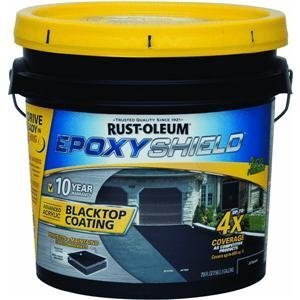
Rust-Oleum EpoxyShield Blacktop Coating is a water-based vinyl acrylic coating made with recycled rubber tires. It was developed to restore the appearance of aging asphalt while offering resistance to UV rays and common chemicals.
Despite the EpoxyShield name, this particular blacktop product is not a conventional two-part epoxy coating. Its technical specifications identify the resin as vinyl acrylic.
Here are the main specifications for Rust-Oleum EpoxyShield Blacktop Coating 247471:
| Product Name | Rust-Oleum EpoxyShield Blacktop Coating |
| Model Number | 247471 |
| Container Size | 2 Gallons |
| Resin Type | Vinyl Acrylic |
| Base | Water-Based |
| Formula | Contains Recycled Rubber Tires |
| Color | Black |
| Finish | Flat/Matte |
| Suitable Surface | Worn or Faded Asphalt Driveways |
| Not Recommended For | Concrete Surfaces |
| Recommended Application Temperature | 50°F–90°F (10°C–32°C) |
| Maximum Surface Temperature | 100°F (38°C) |
| Minimum Temperature Limit | Do Not Apply Below 40°F (4°C) |
| Rain-Free Period | 48 Hours |
| Coverage | Approximately 400–600 sq. ft. per 2-gallon bucket, depending on surface condition |
| Walk Ready | Approximately 1 Hour |
| Drive Ready | Approximately 4 Hours |
| VOC Content | Less Than 50 g/L |
| Shelf Life | 3 Years Under Proper Storage Conditions |
| Application Method | Roller or Suitable Airless Sprayer |
| Product Status | Discontinued in Some Markets; Availability Varies |
Related: Rust-Oleum Concrete Sealer Reviews
Rust-Oleum EpoxyShield Blacktop Coating Review
After trying and comparing different types of driveway sealers over the years, I have come to appreciate products that are simple to apply and do not require too much cleanup.
That is one of the main reasons I like the Rust-Oleum EpoxyShield Blacktop Coating.
Instead of pouring a thick asphalt coating onto the pavement and spreading it with a squeegee, you can apply this product using a regular paint roller with an extension handle.
The formula is made with recycled rubber tires and has a relatively low odor. It is also water-based, so cleaning your tools with soap and water is much easier before the coating dries.
Another advantage is the coverage. According to the product’s technical information, one 2-gallon bucket covers approximately 400–600 square feet, depending on the condition and porosity of the asphalt.
Some older promotional material compared one 2-gallon bucket of EpoxyShield with two 5-gallon buckets of conventional asphalt coating. However, actual coverage varies by product, surface condition, and application thickness.
For a driveway with a rough or heavily worn surface, you may need more material than expected.
The black finish is another reason homeowners may prefer this coating. Once applied, it refreshes the appearance of faded asphalt and gives the driveway a cleaner, more uniform look.
It also provides resistance to UV exposure and common automotive chemicals, helping protect the surface from everyday wear. However, spills should still be cleaned promptly, and the coating cannot repair serious asphalt damage.
Related: Best Asphalt Driveway Sealer Reviews
How Fast Does Rustoleum Driveway Sealer Dry?
One of the biggest advantages of the EpoxyShield Blacktop Coating is its quick drying time.
Under suitable conditions, the manufacturer lists the following drying times:
- Foot traffic: Approximately 1 hour after application.
- Vehicle traffic: Approximately 4 hours after application.
These times are based on approximately 70°F–80°F temperatures and 50% relative humidity.
Cooler temperatures, higher humidity, and thick coats can increase drying time. Therefore, you should never assume the driveway will be ready in exactly four hours under every condition.
Before driving on the surface, make sure the coating is sufficiently dry and follow the product instructions.
You should also avoid applying it when rain is expected within 48 hours.
Rustoleum Driveway Sealer Coverage: How Much Do You Need?
Coverage is an important factor when choosing a driveway sealer, especially if you have a large driveway.
Rust-Oleum EpoxyShield Blacktop Coating was designed to spread efficiently with a roller. Its technical specifications list approximately 400–600 square feet of coverage per 2-gallon bucket.
However, rough or porous asphalt absorbs more coating than a relatively smooth driveway.
Here is an estimated quantity guide based on one coat:
| Driveway Size | Estimated 2-Gallon Buckets |
|---|---|
| 400 sq. ft. | 1 Bucket |
| 600 sq. ft. | 1–2 Buckets |
| 800 sq. ft. | 2 Buckets |
| 1,000 sq. ft. | 2–3 Buckets |
| 1,500 sq. ft. | 3–4 Buckets |
| 2,000 sq. ft. | 4–5 Buckets |
These estimates do not include extra material for a second coat or unusually rough pavement.
If your driveway is badly faded or uneven, buying a little extra material can help prevent interruptions during application.
For additional coverage information, read our guide explaining how much driveway sealer you need for a given area.
What You Need to Do Before Applying Rustoleum 247471 Driveway Sealer
Even a good driveway sealer may fail if you apply it to a dirty or damaged surface.
Before using Rust-Oleum EpoxyShield Blacktop Coating, follow these preparation steps:
- Clean and degrease the driveway: Remove dirt, oil, grease, and loose materials from the surface. For stubborn automotive stains, use a suitable asphalt cleaner and degreaser. Do not apply the coating directly over oily patches.
- Trim surrounding grass and weeds: Cut back any vegetation growing along the driveway edges or through existing cracks. This helps keep the coating area clean and makes application easier.
- Remove debris from cracks and holes: Use a wire brush or screwdriver to clear loose asphalt, dirt, and stones. Repair damaged areas before sealing.
- Repair cracks and potholes: Apply a compatible asphalt crack filler or patching compound. Rust-Oleum’s original instructions recommend repairing cracks and holes before coating rather than expecting the sealer to fill them.
- Rinse the driveway: Wash away remaining dirt and cleaning products using fresh water. Allow the surface to dry thoroughly before proceeding.
- Check the weather forecast: Choose a dry period with temperatures between 50°F and 90°F. Make sure no rain is forecast for at least 48 hours.
- Keep the area clear: Move vehicles, toys, garden equipment, and other objects away from the driveway. Keep children and pets away during application and until the surface is ready for use.
Important: Newly paved asphalt should be allowed to cure for at least six months or one full summer season before applying this coating, according to Rust-Oleum’s instructions.
Also, do not use this product on concrete. If your driveway is made of concrete rather than asphalt, choose a suitable concrete sealing product instead.
How to Apply Rust-Oleum EpoxyShield Blacktop Coating
Once the driveway is clean, dry, and repaired, the application process is relatively simple.
Step 1: Stir the coating thoroughly.
Open the bucket and mix the contents until the pigment is evenly distributed. Do not dilute the product or mix it with another driveway coating.
Step 2: Coat the driveway edges.
Use a paintbrush to apply the coating around the edges and areas that are difficult to reach with a roller.
Step 3: Apply the coating with a roller.
Use a 3/8-inch to 1/2-inch nap roller attached to a long extension handle.
Apply the coating directly from the bucket in sections of approximately four feet by four feet.
Roll across each section in perpendicular directions to spread the product evenly and produce a consistent finish.
Step 4: Avoid applying a thick coat.
Do not pour the coating directly onto the driveway or spread it with a squeegee. Applying too much material can cause peeling and uneven drying.
If the asphalt is heavily worn, a second thin coat may help improve the appearance. Follow the manufacturer’s drying and application instructions.
Step 5: Allow the driveway to dry.
Under ideal conditions, the surface may be ready for walking after one hour and driving after four hours.
Keep vehicles off the driveway longer if the weather is cool or humid or the coating has not dried properly.
Step 6: Clean the tools immediately.
Wash rollers, brushes, and other equipment with warm water and mild detergent before the coating dries.
Why Buy This Rustoleum Driveway Sealer?
The main advantages of Rust-Oleum EpoxyShield Blacktop Coating are its easy application, attractive black finish, and quick drying time.
Unlike many conventional asphalt coatings, you do not need specialized spreading equipment for a typical residential application.
Pros:
- Easy to apply using a standard paint roller.
- Water-based vinyl acrylic formula with relatively low odor.
- Made with recycled rubber tires.
- Dries quickly under suitable weather conditions.
- Covers approximately 400–600 sq. ft. per 2-gallon bucket.
- Helps protect asphalt from UV exposure and common chemicals.
- Refreshes faded asphalt with an attractive black finish.
- Requires less material than some traditional driveway coatings.
- Tools can be cleaned with soap and water.
- Suitable for DIY homeowners with basic painting experience.
Cons:
- The original 247471 coating has been discontinued in some markets, making availability uncertain.
- It may cost more per container than some conventional asphalt sealers.
- Not suitable for concrete driveways.
- Very rough or damaged asphalt may require additional material or a second coat.
- Cannot be applied during rainy weather or outside the recommended temperature range.
- Applying thick coats may cause peeling.
Related: Henry Driveway Sealer Buying Guide
This Amazon link is for Rust-Oleum Marine Topside Paint rather than the EpoxyShield asphalt coating reviewed above. The marine paint is not a suitable replacement for driveway sealer.
Related: Latex-ITE Driveway Sealer Review
How Long Does Rustoleum Driveway Sealer Last?
The lifespan of a driveway sealer depends on the asphalt condition, vehicle traffic, climate, and how well the surface was prepared.
Rust-Oleum designed EpoxyShield Blacktop Coating to provide longer-lasting protection than many conventional asphalt coatings.
However, the manufacturer’s technical documentation does not establish a guaranteed service life for every driveway. Therefore, it would be misleading to assume that the coating will always last ten years without maintenance.
Driveways exposed to heavy traffic, intense sunlight, snow, de-icing salts, or standing water may need attention sooner than lightly used surfaces.
Inspect the driveway periodically for worn areas, peeling, fading, and cracks.
If the coating begins to deteriorate, clean and repair the surface before applying a compatible new coating.
For a product that is no longer widely available, it may be more practical to choose a current asphalt sealer with clear application instructions and reliable product availability.
Conclusion
Rust-Oleum EpoxyShield Blacktop Coating 247471 offers several attractive features, especially for homeowners who want to refresh an aging asphalt driveway without complicated tools.
Its water-based vinyl acrylic formula, recycled rubber content, quick drying time, and black finish make it a convenient option for suitable asphalt surfaces.
I particularly like the fact that it can be applied with a paint roller and cleaned up using soap and water.
However, product availability is an important consideration in 2026. Since the original coating has been discontinued in some markets, you should confirm that you are purchasing the correct product rather than another Rust-Oleum coating with a similar name.
If you cannot find the original EpoxyShield Blacktop Coating, consider a currently available asphalt sealer that matches your driveway condition, climate, and maintenance needs.
FAQs
If you apply sealer over oil, grease, loose dirt, or incompatible existing coatings, it may not bond properly to the asphalt.
Excessive application thickness, trapped moisture, rain during curing, and unsuitable temperatures can also cause peeling or premature failure.
Clean the surface thoroughly, treat oil stains with a compatible cleaner, and repair damaged areas before sealing.
Turning tires, braking, acceleration, and repeated vehicle movement create additional friction that can gradually wear down the coating.
Poor adhesion and damaged asphalt can make the problem worse.
Before recoating, check the underlying pavement condition and follow the manufacturer’s preparation requirements. A compatible primer may help with certain products, but it should only be used when recommended.
Cool temperatures, excessive humidity, moisture, or uneven application can affect the final color.
In some cases, the color may darken as the coating continues to dry. However, persistent gray patches can indicate moisture damage or coating failure.
Do not assume that sunlight will always restore the finish. Allow the coating to dry completely and inspect the surface before attempting another coat.
If you have a concrete driveway, use a sealer specifically designed for concrete rather than applying this asphalt coating.
Rust-Oleum’s instructions mention that an extremely hot surface may be lightly misted with water during preparation, but standing water must be removed.
This does not mean the product should be applied over wet pavement. Excess moisture can interfere with adhesion and curing.
However, cool temperatures, high humidity, and excessive coating thickness can increase drying time.
Allow additional time when necessary and do not drive on the surface until the coating has dried sufficiently.
Remaining inventory may still exist, but availability can vary. Check the model number carefully before ordering.
Because the product’s listed shelf life is three years, older stock should also be checked for its manufacturing date, storage condition, and usability.
Applying a coating too early may interfere with adhesion and lead to premature failure.
Do we have to put sand in it to prevent slipping
No