
Last Updated on November 5, 2026
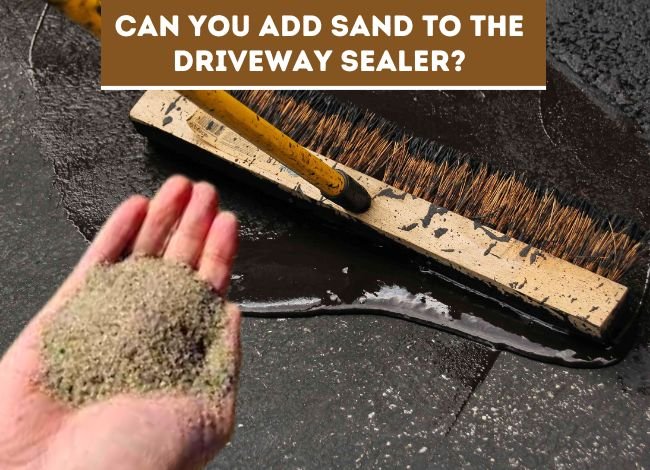
You can add sand to driveway sealer only when the manufacturer allows it and gives a mix design for that exact product. This is common with some contractor-grade sealer concentrates, where measured aggregate is added in a mixing tank. However, many homeowner pails are already blended with sand or another traction aggregate and are sold ready to use. Adding more material to those products can make them difficult to spread, reduce adhesion, create an uneven finish, and interfere with curing.
That distinction matters more than any universal sand-to-sealer ratio. The sealer label or current technical data sheet should identify the permitted sand loading, aggregate grading, water or additive allowance, application rate, and mixing procedure. If the instructions do not authorize field-added sand, use the product as supplied rather than creating your own recipe.
Why do people add sand to the driveway sealer?
Sand is mainly used to add texture to a cured sealcoat. On a compatible asphalt-sealer system, the correct aggregate can improve traction, create a more uniform-looking surface, and help the coating resist wear. It is not a substitute for correct surface preparation or a repair material for structural damage.
- Improved traction: Fine, clean aggregate gives the cured coating more texture. This can reduce the slick feel of an overly smooth sealcoat, although no coating can make a wet or icy driveway slip-proof.
- More even texture: Properly graded sand can help a professionally mixed coating produce a consistent finish across worn asphalt.
- Wear resistance: In a manufacturer-approved mix, aggregate can help the sealcoat tolerate normal tire and foot traffic. Too much sand does the opposite by weakening the film and reducing adhesion or flexibility.
- Better application control: Some contractor concentrate systems are designed around a specific combination of sealer, water, additive, and sand. The complete mix design—not sand alone—determines viscosity, coverage, cure, and performance.
Sand does not provide the sealer’s main ultraviolet protection, and sparkling grains are not the goal of a sound sealcoat. The binder and approved formulation form the protective film. Exposed or loose sand can indicate poor mixing, excessive loading, an unsuitable aggregate, or a coating that did not bond correctly.
Ready-to-use sand mix vs contractor sealer concentrate
| Sealer type | Is extra sand normally added? | What to follow |
|---|---|---|
| Ready-to-use homeowner sand mix or filler/sealer | Usually no. The pail may already contain traction aggregate, fillers, polymers, and water in the intended proportions. | Stir and apply exactly as directed. Do not dilute or add aggregate unless the current label specifically permits it. |
| Ready-to-use smooth driveway sealer | Not automatically. A smooth formula is not proof that field-added sand is compatible. | Check the product instructions. Choose a factory sand-filled product when extra texture is wanted and no approved loading is given. |
| Contractor-grade concentrate | Often, but only as part of the manufacturer’s full mix design. | Use the specified aggregate grading and loading, approved additives, dilution, agitation, coverage, and coat schedule. |
For example, a factory-made sand-mix driveway sealer can be labeled ready to apply and intended to fill only hairline surface cracks. A contractor concentrate may instead specify hundreds of pounds of a particular mesh range per 100 gallons. Those are different product systems. Converting either instruction into one universal pounds-per-gallon rule would be inaccurate.
What kind of sand is suitable for driveway sealer?
The suitable aggregate is the type and gradation named by the sealer manufacturer. Professional mix designs commonly call for clean, hard, angular silica sand within a stated mesh or AFS grading range. That controlled particle size helps the material remain suspended, move through the intended application equipment, and produce consistent texture. It is not enough to add sand to driveway sealer without confirming that grading.
Do not assume play sand, masonry sand, beach sand, damp bagged sand, or whatever material is already on the property will work. Uncontrolled fines can thicken the mix, while oversized grains can settle, drag under a squeegee, clog equipment, or leave a rough and weak surface. Moisture, clay, salts, organic material, and soft particles can also interfere with the coating. If the label does not state an acceptable aggregate, contact the manufacturer or select a ready-to-use sand-filled sealer.
How to add sand to driveway sealer safely
Before you add sand to driveway sealer, confirm that the product is intended for the driveway substrate. Asphalt or blacktop coatings are not interchangeable with clear penetrating concrete sealers or film-forming concrete coatings. For more background on the surfaces, see the comparison of asphalt and concrete driveways. Adding aggregate to a concrete sealer requires that concrete product’s own slip-resistance instructions.
Check the product-specific mix design
Read the current container label and technical data sheet before opening the pail. Confirm whether the material is ready to use or a concentrate. Before you add sand to driveway sealer, note the permitted sand range, specified grading, batch size, dilution water, compatible additive, mixing order, agitation requirements, coverage, number of coats, temperature range, and time before traffic.
Do not combine the sand recommendation from one brand with the water or additive recommendation from another. Formulas vary, even when both products are described as asphalt-emulsion sealers. The old idea that every sealer needs 10 to 15 pounds of sand, or a fixed two or three pounds per gallon, is not reliable. Some approved concentrate recipes fall outside that range, while ready-to-use pails may permit no additional sand at all.
Clean and prepare the driveway
Sweep away loose aggregate, leaves, and dirt. Remove oil contamination with a cleaner approved by the sealer manufacturer, rinse as directed, and let the pavement reach the moisture condition stated on the label. Protect adjoining concrete, garage floors, drains, landscaping, and walls from splashes. New asphalt must cure for the period required by the selected product; this varies among manufacturers and should not be replaced with a single universal waiting time.
Repair cracks and holes separately
Driveway sealer is a thin surface coating, not a general-purpose crack or pothole filler. A sand-filled filler/sealer may bridge hairline surface cracks, and some specific products allow minor cracks up to a stated width. Wider cracks, deep gaps, depressions, and potholes require the compatible crack filler or patching material named for the repair. Allow repairs to cure for the required time before sealcoating.
Pouring extra sealer into a crack creates a thick mass that can remain soft, shrink, track onto tires, or crack again. It also does not correct movement, base failure, poor drainage, or an alligator-cracked area. Repairing these defects first is one of the most important parts of a lasting result. Our guide to the pros and limits of sealing an asphalt driveway explains what a surface coating can and cannot fix.
Mix with continuous, suitable agitation
When field-added sand is approved, use equipment capable of producing a uniform batch and keeping the aggregate suspended. A professional procedure normally starts with the manufacturer’s concentrate and introduces the approved water or additive in the specified order while the material is agitated. The measured sand is then added gradually, not dumped in one place. Continue mixing as directed before and during application so the first and last sections receive a similar texture.
A small household pail and hand stick may not be adequate for a contractor concentrate that requires a large mixing tank and ongoing mechanical agitation. If you cannot follow the specified process, use a ready-to-use homeowner product instead of trying to scale down a commercial recipe by guesswork.
Apply the sealant to the entire driveway
Apply thin, even coats at the label’s coverage rate with the recommended squeegee, brush, or spray system. A thicker coat is not automatically stronger. Heavy application can cure unevenly, track under tires, develop surface cracks, and reduce coverage. When two coats are required, let the first coat dry for the stated interval and apply the second in the recommended direction.
Plan the work around the full weather window. Surface and air temperature, humidity, shade, dew, and rain can all change drying time. Stop if conditions fall outside the product requirements.
Let the sealer cure
Keep people, pets, vehicles, sprinklers, and rain off the coating for the time shown on the label. “Dry to the touch” does not necessarily mean ready for vehicle traffic. Some products may be traffic-ready under ideal conditions within about a day, while others require 24 to 48 hours or longer when weather is cool or humid. Use the longer instruction when the label gives different times for walking, recoating, and driving.
How long will a sand-filled sealcoat last?
No honest answer can promise ten years simply because sand was included. Service life depends on the product, preparation, pavement condition, coat thickness, drainage, climate, traffic, fuel or oil exposure, snow-removal methods, and whether the mix and cure followed the label. Product warranty periods also vary and come with conditions; they should not be treated as a guarantee that every driveway will remain sealed for that exact number of years.
Inspect the surface periodically rather than sealing again by the calendar alone. Fading color is less important than widespread loss of coating, exposed aggregate, open cracks, or water entering damaged areas. Repair defects promptly and recoat only when the pavement and selected product call for it. Applying new sealer too often can create excessive buildup and peeling.
Final thoughts
You can add sand to driveway sealer when the exact concentrate is designed for field loading and you can follow its complete mix design. For a ready-to-use sand mix, additional aggregate is normally unnecessary and may harm the finish. Use only the manufacturer-approved aggregate, repair cracks and potholes with dedicated materials, apply thin coats at the stated coverage, and allow the full cure before traffic. When product instructions are silent, choose a compatible factory sand-filled formula instead of inventing a ratio.
can you suggest a person who adds sand to a driveway sealant for my driveway. Area code 44654
Hi Donna! ZIP code 44654 covers the Millersburg, Ohio area. I’d recommend contacting local asphalt sealcoating contractors and asking specifically whether they offer sand-enhanced driveway sealing for improved traction. Not every sealer is designed for added sand, so make sure the contractor uses a compatible product and provides an estimate before starting. You can also search for “driveway sealcoating contractors near Millersburg, OH” to find local options.