
Last Updated on November 5, 2026
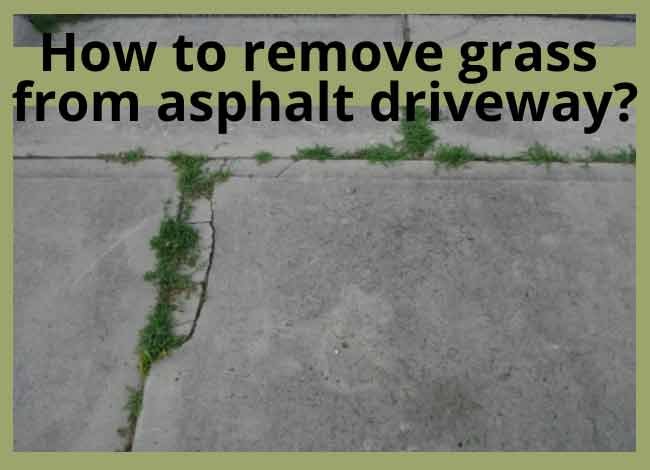
Grass growing through an asphalt driveway looks untidy and makes cracks harder to maintain. As tough as asphalt is, it is not vegetation-proof. Seeds can settle in dirt-filled cracks, while grass at the edges can spread into gaps. Removing the growth and repairing suitable cracks works better than repeatedly cutting off the blades.
If you are wondering how to remove grass from asphalt driveway cracks, start with hand removal and a good inspection. The advice “It is necessary to seal the driveway” needs qualification: removing grass does not automatically mean the whole driveway needs sealcoating. Even the best Asphalt sealers on the market cannot replace crack repair or provide a permanent weed barrier.
What makes grass and other weeds push through asphalt?
Grass does not always mean the driveway was installed badly. Older, well-built pavement can develop cracks that collect windblown soil, seeds, and moisture. Here are the common reasons vegetation appears:
- Dirt and leaf debris collect in open cracks, providing a place for seeds to germinate.
- Grass runners or underground stems spread from an adjoining lawn into vulnerable edges.
- Existing perennial roots survive site clearing and later regrow through weak spots or gaps.
- Movement, drainage problems, or an inadequate base cause cracking and leave room for plants.
- Repeatedly coating over dirty, open cracks leaves the underlying problem untreated. Learning to reseal your driveway correctly helps with surface maintenance, but coating alone will not eliminate roots.
Skipping a pre-emergent herbicide does not by itself prove poor installation. Nor should grass automatically be blamed on hot asphalt warming dormant seeds. Look at where the growth occurs and whether the surrounding pavement is sound.
How to remove grass from asphalt driveway
Pull or scrape out small patches first
For a few clumps, hand removal is usually the simplest place to start. Wear gloves, grip the grass near its base, and pull steadily to remove as much of the root system as possible. A narrow weeding tool or crack scraper can help loosen roots without prying apart the asphalt edges.
Work when the soil in the crack is slightly moist, but avoid digging into soft or crumbling pavement. Collect the roots and loosened debris rather than washing them into a drain. Cutting only the visible blades makes the driveway look tidier temporarily, but established grass can grow back from the roots.
This approach helps you remove grass from asphalt driveway cracks while seeing how much repair is needed. If growth returns from deep runners, identify the plant before choosing further treatment. Pull new seedlings promptly instead of letting another thick clump establish.
Boiling water
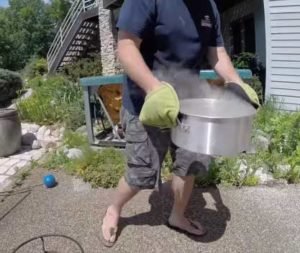
Use protective footwear and controlled pouring, rather than the large open-pot approach shown.
Hot water can kill the plant tissue it touches and may control very young annual weeds. It is much less reliable on established grasses with protected roots or underground stems. Wilting leaves do not prove the whole plant is dead, and repeat treatment may be needed.
Boiling water can also scald you and injure nearby plants. If you use it for a small isolated patch, use a manageable kettle with a controlled spout, keep children and pets clear, and avoid splashing or runoff toward lawn edges. Do not carry a large open pan across the driveway.
Check the existing coating’s care instructions before exposing it to near-boiling water. Where surface compatibility is uncertain, hand removal is the better choice. Do not automatically follow hot water with weedkiller: choose an appropriate next step only if regrowth warrants it.
Related article: How Much Driveway Sealer Do You Need to Seal Your Driveway?
Vinegar
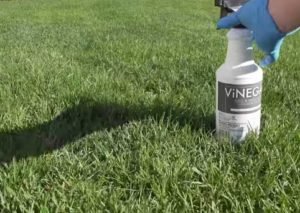
Keep any labeled treatment on the target weed, away from the lawn and plants you want to keep.
Vinegar is often suggested as a home remedy, but it mainly damages foliage on contact. It does not travel through the plant to reliably kill deep roots. Household vinegar may scorch small seedlings while leaving mature grass able to regrow.
Stronger horticultural vinegar can cause serious skin and eye injury. If considering an acetic-acid herbicide, choose a properly labeled product for the site and follow its application and protective-equipment instructions. Do not improvise a stronger mixture or combine vinegar with salt, detergent, or other household chemicals.
Do not drench cracks until liquid runs off. Vinegar can injure desirable plants, and a temperature below 85°F does not make spraying automatically safe or effective. Product directions, drift, runoff, and surface compatibility matter. Seal your asphalt driveway only when its condition and the sealer instructions call for it; frequent sealcoating does not solve a root problem.
Propane torch
A propane torch is not a good default method for removing grass from an asphalt driveway. Open flame can ignite dry vegetation, leaf debris, nearby mulch, or spilled fuel. Intense heat can also affect asphalt or its coating. Routine weed removal should not turn into pavement heating or a fire risk.
Flame treatment generally damages exposed growth rather than guaranteeing removal of underground grass roots. Keep this method out of a routine DIY asphalt-maintenance plan; pulling and appropriately selected spot treatment offer more control without an open flame.
Weedkiller spray
A labeled herbicide may help with persistent grass that cannot be removed effectively by hand. First identify the plant and check that the product permits use on driveway cracks or the relevant non-crop site. A lawn weedkiller designed to spare grass will not necessarily kill the grass you want to remove.
Products differ. Contact herbicides damage the tissue they reach, while suitable systemic products can move within the plant and may control established perennial growth. Not every weedkiller contains glyphosate, and no spray should be assumed to kill grass, roots, moss, and algae equally well.
When using herbicide to remove grass from asphalt driveway cracks, spot-treat the target vegetation as directed. Avoid blanket spraying over bare pavement, overspray onto lawns, and runoff into gutters or storm drains. Follow the label for dilution, weather, protective equipment, repeat applications, and when people or pets may return.
Some systemic treatments need time on living foliage before you pull, cut, or clean it away. Follow that product’s waiting period, then remove dead growth and prepare the crack. Do not assume that combining several treatments will work better.
Related article: Follow these easy steps to remove asphalt sealer from concrete
Fill cracks
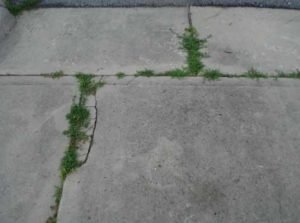
Removing vegetation leaves the opening that allowed it to grow. Once the roots and loose material are out, sweep or vacuum the crack. Remove contamination and let the surface reach the condition required by the repair product. Do not fill over living grass or pack ordinary garden soil into the gap.
Use a crack filler or repair material labeled for asphalt and for the crack’s width and depth. Follow its directions for backing material, application thickness, temperature, and curing before traffic or sealcoating. A thin driveway sealcoat is not a substitute for filling an open crack.
Small, stable cracks may suit a homeowner repair. Wide gaps, crumbling edges, sinking areas, or networks of interconnected cracks may need patching or professional assessment. If the base or drainage is failing, filler alone is unlikely to last. Repairing the opening helps reduce future growth, but new cracks can still develop.
Avoid spreading salt
Salt can injure or kill plants by disrupting their water balance, but it is a poor choice for driveway weed control. Rain can move it into nearby soil and damage lawn, trees, and garden plants. Repeated use can leave salt accumulating where you want plants to grow.
Do not fill cracks with table salt or use a salt-and-vinegar mixture as a permanent barrier. Killing the visible grass does not fix the pavement opening, and the unwanted effects can extend beyond the treated spot. Remove the plant and repair the crack instead.
How to stop grass and other plants from coming through the asphalt driveway?
Successful prevention combines cleaning, edge care, and repair. The claim that an asphalt driveway is less durable than a Concrete driveway is too broad to explain a particular weed problem. Both surfaces can develop cracks or joints that collect dirt and support vegetation.
After you remove grass from asphalt driveway cracks, use the following steps to make recurrence less likely:
- Sweep away soil, leaves, and grass clippings before they settle into gaps.
- Keep lawn edges trimmed and remove runners spreading over the asphalt.
- Inspect repaired cracks and remove new seedlings before their roots establish.
- Correct persistent puddles and drainage problems rather than coating over them.
- Use compatible asphalt repair materials where appropriate. Sealcoat only when the surface needs it, following preparation and curing instructions.
For a new driveway or a section being rebuilt, proper excavation, removal of vegetation, suitable subgrade preparation, and a well-compacted aggregate base matter. Letting loose gravel settle for two weeks does not replace mechanical compaction. Base width, depth, and asphalt thickness should suit the soil, drainage, and expected vehicle loads rather than a universal recipe.
A pre-emergent herbicide is not a substitute for construction quality and will not remove existing roots. Use one only if its label permits the site and the treatment is warranted; do not apply a stronger product simply because paving is planned. Follow the contractor’s opening-to-traffic guidance for new asphalt rather than assuming 24 hours always suffices.
Final thoughts
The most useful way to remove grass from asphalt driveway cracks is to deal with both the plant and the opening. Start with careful hand removal, consider targeted treatment for persistent growth, then clean and repair suitable cracks. Boiling water and vinegar have limitations; salt and open flame are poor routine choices here.
If you also have moss on your asphalt driveway, identify that growth separately instead of assuming a grass herbicide will treat it. A quality asphalt sealer can help maintain a suitable asphalt surface, but it cannot permanently prevent weeds or repair structural damage. Regular inspection and prompt crack maintenance make a bigger difference than repeatedly covering regrowth.