

Last Updated on October 24, 2026
Choosing the best asphalt sealer is an important step in protecting your driveway or parking lot from everyday wear while giving it a fresh, attractive black finish.
Installing an asphalt driveway is only the beginning. Regular maintenance helps keep it in good condition for years. Asphalt surfaces face constant exposure to UV rays, rain, freezing temperatures, road salts, oil spills, and heavy vehicle traffic. Without proper care, these elements can cause fading, cracks, potholes, and expensive repairs.
That’s why applying a high-quality asphalt driveway sealer is worth considering. The right product helps slow surface deterioration, reduces water penetration, and restores the rich black appearance of older pavement.
Top 3 Best Asphalt Sealer Comparison Table (2026)
Before choosing a product, remember that driveway sealers and crack fillers serve different purposes. A driveway sealer coats the asphalt surface, while a crack filler repairs individual openings. Both can be useful for proper driveway maintenance.
| Image | Asphalt Sealer | Key Features |
|---|---|---|
 Check Price |
Henry Driveway E-Z Stir Asphalt Filler & Sealer |
|
 Check Price |
Black Jack Drive-Maxx Driveway Filler & Sealer |
|
 Check Price |
Red Devil 0637 Acrylic Asphalt Crack Filler |
|
Why You Need an Asphalt Sealer
A quality asphalt sealer provides an additional protective layer over existing asphalt. It helps reduce the effects of sunlight, moisture, and normal traffic while improving the driveway’s appearance.
Some important benefits include:
- Water resistance: Helps reduce moisture penetration into the asphalt surface.
- UV protection: Slows oxidation, which can make asphalt brittle and faded.
- Improved appearance: Restores a uniform black finish to worn pavement.
- Easier maintenance: Makes dirt and minor surface stains easier to remove.
- Longer service life: Regular maintenance can help delay surface deterioration.
However, asphalt sealers cannot repair serious structural damage, deep potholes, or a failing driveway base. Those problems require proper repairs before sealing.
Whether you’re maintaining a residential driveway or a small parking area, selecting the right product can make a noticeable difference.
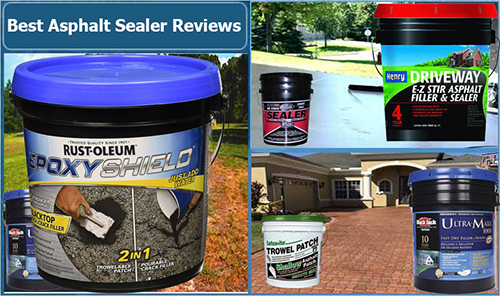
We’ve compared several best asphalt sealer options for 2026, including full-surface coatings and repair products that help prepare damaged asphalt for sealing.
Types of Asphalt Driveway Sealers
Not all asphalt sealers use the same ingredients. Understanding the differences will help you choose a suitable coating.
Asphalt Emulsion Sealers
Asphalt emulsion sealers are commonly used on residential driveways. They generally contain asphalt, water, mineral fillers, and other additives.
These products are usually easy to apply and offer good protection against sunlight and moisture. Many homeowners prefer them because they are water-based and relatively easy to clean up.
Polymer-Modified Asphalt Sealers
Polymer-modified sealers contain additives such as latex or other polymers to improve flexibility, adhesion, and wear resistance.
They are a popular choice for homeowners who want better durability than basic asphalt emulsion products.
Acrylic Asphalt Coatings
Acrylic-based coatings can provide excellent color retention and surface protection. However, not every acrylic sealer is designed for asphalt.
If you prefer an acrylic finish, make sure the product specifically lists asphalt or blacktop as a compatible surface.
Coal Tar Sealers
Coal tar sealers have traditionally been used because of their resistance to gasoline, oil, and other automotive chemicals.
However, coal tar products contain polycyclic aromatic hydrocarbons (PAHs), which raise environmental and health concerns. Their use is restricted or prohibited in certain locations. For residential projects, asphalt-based alternatives are generally the more practical choice.
Before Applying Asphalt Sealer: Proper Surface Preparation
Even the best asphalt sealer may fail if it is applied to dirty, damaged, or wet pavement.
- Clean the driveway: Sweep away dirt, leaves, sand, and loose debris. Remove oil and grease with a suitable cleaner.
- Repair cracks: Use an asphalt-compatible crack filler and allow it to cure according to the manufacturer’s instructions.
- Fix potholes: Repair damaged sections using a proper asphalt patching compound.
- Allow the surface to dry: Moisture can interfere with adhesion and curing.
- Check the weather: Most products require temperatures of at least 50°F (10°C), although specific requirements vary.
- Mix the sealer: Stir thoroughly unless the manufacturer instructs otherwise.
- Apply evenly: Use a suitable squeegee, brush, or applicator recommended for the product.
- Allow proper curing: Keep vehicles off the driveway until the coating is ready for traffic.
For more guidance on weather and application conditions, read our article about the best time of year to seal a driveway.
Frequently Asked Questions About Asphalt Sealers
1. What is the best type of asphalt sealer?
For most residential driveways, a quality asphalt emulsion or polymer-modified asphalt sealer is a practical choice. These products offer good protection and are relatively easy to apply. The ideal formula depends on the driveway’s condition, local climate, and traffic.
2. How long does asphalt sealer last?
Most residential asphalt sealers provide approximately 2 to 3 years of protection, although some may last longer under favorable conditions. Traffic, sunlight, weather, and surface preparation all affect durability.
3. How often should you seal an asphalt driveway?
A common maintenance interval is every 2 to 3 years. However, sealing should be based on the condition of the surface rather than a fixed schedule. Applying too many coats can lead to buildup, cracking, and peeling.
4. When is the best time to apply asphalt sealer?
Warm, dry weather is generally best. Many sealers require air and pavement temperatures above 50°F, with no rain expected during the recommended curing period.
5. Can I apply asphalt sealer myself?
Yes. Many asphalt sealers are designed for DIY application. A clean surface, properly repaired cracks, and careful application are essential for good results.
6. How long does asphalt sealer take to dry?
Some sealers become dry enough for foot traffic within a few hours. Vehicle traffic may require 24 to 48 hours or longer. Always follow the instructions for the exact product.
7. What tools do I need to apply asphalt sealer?
- A driveway squeegee or application brush
- A stiff broom or leaf blower
- An asphalt crack filler
- A mixing tool if required
- Protective gloves and safety glasses
- A suitable cleaner for oil and grease stains
Best Asphalt Sealer Reviews 2026
Investing in the best asphalt driveway sealer can help protect pavement from ordinary wear while reducing the need for frequent maintenance.
Below are several asphalt sealing and repair products worth considering. The first products are primarily designed for full driveway sealing, while the later options are useful for repairing cracks and damaged areas before applying a protective coating.
1. Henry 200 E-Z Stir Driveway Asphalt Filler and Sealer
Henry E-Z Stir is one of the more familiar asphalt sealers available for residential driveway maintenance. It is designed for homeowners who want a product that is easy to mix and apply.
This rubberized asphalt emulsion formula helps protect the pavement and fill very small surface cracks up to 1/8 inch wide.
According to Henry’s product information, a pail covers approximately 250 to 500 square feet, depending on surface texture and porosity. This coverage is for the entire pail, not per gallon.
The coating generally dries to the touch in approximately four hours, while vehicle traffic may require 24 to 48 hours under suitable conditions.
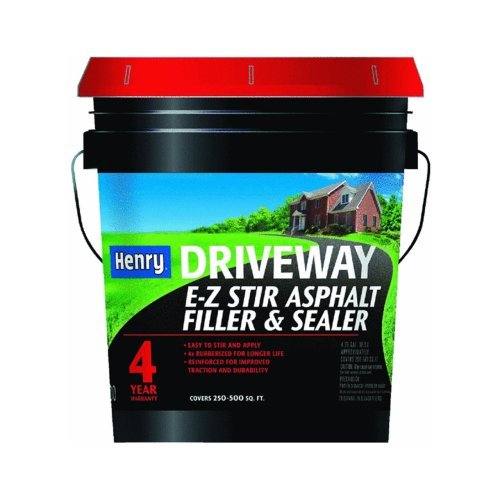
Henry E-Z Stir is reinforced to improve traction and durability. It also comes with a four-year limited warranty, subject to the manufacturer’s conditions.
Pros:
- Easy to stir and apply.
- Fills minor hairline cracks.
- Helps restore faded blacktop.
- Reinforced for traction and durability.
- Suitable for DIY driveway maintenance.
Cons:
- Not suitable for large cracks or potholes.
- Coverage decreases on rough or porous asphalt.
- Requires suitable weather for proper curing.
2. Black Jack Drive-Maxx Asphalt Driveway Filler and Sealer
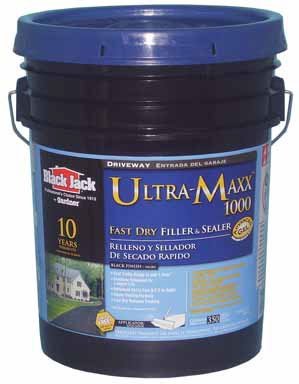
Black Jack offers several asphalt driveway coatings, including Drive-Maxx 700 and the premium Drive-Maxx 1000.
The Drive-Maxx 1000 is a rubberized blacktop filler and sealer enhanced with latex polymer and urethane technology. Its gel formula makes application easier, while the coating helps restore the appearance of old asphalt.
Under favorable drying conditions, Drive-Maxx 1000 may allow foot traffic after approximately one hour. The manufacturer requires at least 24 hours before vehicle traffic.
The Drive-Maxx 1000 carries a 10-year limited warranty, but this is not a guarantee that every application will last ten years without maintenance.
The shopping link below identifies product code 6453-9-30, which belongs to the Drive-Maxx 700 range. Check the exact model before buying, as its specifications and warranty differ from Drive-Maxx 1000.
Black Jack’s polymer-enhanced coatings are useful for homeowners who want an attractive black finish and good resistance to normal driveway traffic.
For a more detailed comparison of the brand’s products, read our Black Jack driveway sealer review.
Pros:
- Produces a uniform black finish.
- Polymer-enhanced options improve durability.
- Gel formulas are relatively easy to apply.
- Designed for asphalt driveways.
- Premium versions offer faster drying under suitable conditions.
Cons:
- Different Drive-Maxx models have different specifications.
- Some formulations require two uniform coats.
- Drying takes longer in cool or humid weather.
3. Dewitt Products TV335854 Driveway Sealer
Dewitt Products TV335854 has appeared in driveway sealing product listings, although current specifications and availability should be confirmed before purchasing.
The original product has been described as an acrylic latex driveway coating intended to help protect asphalt from everyday exposure to water, sunlight, and automotive stains.
Water-based acrylic latex coatings can be convenient for homeowners because they generally have less odor and allow easier cleanup than many solvent-based products.
However, the exact formula, container size, and coverage of this Dewitt model should be verified using the current product label.

Important: The linked DryWay Plus product is a penetrating water repellent intended for compatible masonry surfaces, not a confirmed replacement for Dewitt TV335854 asphalt sealer. Do not substitute it for an asphalt driveway coating without checking the manufacturer’s approved surfaces.
Pros:
- Acrylic latex driveway coatings can be easy to apply.
- Water-based formulas are generally convenient for cleanup.
- Suitable formulations may help resist weathering and stains.
Cons:
- Current Dewitt model specifications are difficult to confirm.
- The linked product is not the same as the named driveway sealer.
- Not recommended without verifying compatibility and availability.
4. Henry E-Z Stir Driveway Asphalt Filler and Sealer
Another listing for Henry E-Z Stir driveway asphalt sealer offers the same practical benefits discussed earlier. This product is suitable for sealing residential blacktop driveways with minor surface cracks.
Its easy-stir formula helps simplify application, and its reinforced coating offers improved traction and surface durability.
A standard pail covers roughly 250 to 500 square feet, depending on the driveway’s condition. Rough surfaces generally require more material.
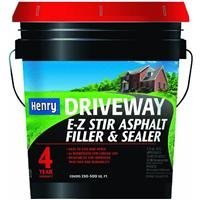
This is the same Henry E-Z Stir product family covered in our first review, rather than a separate formula. Compare the package quantity and current price before choosing a listing.
Pros:
- Simple DIY application.
- Helps fill small surface cracks.
- Restores a uniform black finish.
- Four-year limited warranty.
Cons:
- Not designed for deep cracks or structural repairs.
- Requires a clean, dry surface.
5. Rust-Oleum EpoxyShield Blacktop Patch and Crack Filler
Rust-Oleum is a well-known name in protective coatings and surface repair products. Its EpoxyShield Blacktop Patch and Crack Filler, model 250700, is designed to repair minor holes, cracks, and deteriorated areas of residential asphalt driveways.
Unlike a regular liquid asphalt sealer, this product is a dry powder repair compound that must be mixed with water before application.
It can be applied using a trowel to repair suitable damaged areas before sealing the driveway.
According to the product’s technical information, it can repair holes up to approximately one inch deep without extending the mixture. Follow the manufacturer’s directions for deeper repairs.
For a closer look at the brand’s driveway products, see our Rust-Oleum driveway coating and repair review.

Important: The linked Rust-Oleum 369667 Pourable Concrete Patch is designed for concrete repairs. It is not the same product as EpoxyShield Blacktop Patch and Crack Filler 250700. For an asphalt driveway, choose the blacktop-compatible repair product.
Pros:
- Designed for repairing damaged asphalt.
- Suitable for minor holes and surface cracks.
- Can help prepare the driveway before sealing.
- Trowel application allows controlled repairs.
Cons:
- Not a full-surface asphalt sealer.
- Requires mixing and preparation.
- Must be allowed to cure as directed before coating.
6. Dalton Enterprises Latex-Ite Trowel Patch
Last but not least is the Latex-Ite Trowel Patch from Dalton Enterprises.
This asphalt repair product is designed for medium to large cracks, shallow depressions, low spots, and minor damaged areas on blacktop surfaces.
The thick formula can be spread with a trowel to smooth uneven sections before applying a driveway sealer.
Latex-Ite Trowel Patch is available in different container sizes. Model 32051 is the 2-gallon version, while model 32016 is a 1-gallon version.
The manufacturer specifies an application temperature of approximately 55°F and rising, with a typical curing period of 24 to 48 hours under suitable conditions.

The ready-to-use formula makes minor repairs easier for homeowners. However, the product is intended for localized asphalt repairs rather than sealing an entire driveway.
Pros:
- Useful for shallow depressions and wider cracks.
- Ready-to-use formula.
- Easy to spread with a trowel.
- Helps smooth damaged asphalt before sealing.
- Available in multiple container sizes.
Cons:
- Not suitable as a complete driveway coating.
- Requires proper curing before further work.
- Not intended to repair serious structural pavement damage.
Final Thoughts: Which Asphalt Sealer Should You Choose?
With so many asphalt sealing and repair products available, selecting the right one can be confusing. The best choice depends on whether your driveway needs a protective coating, minor crack repairs, or more substantial patching.
For general residential driveway sealing, Henry E-Z Stir is a convenient option with simple application and reliable surface protection.
If you want a premium polymer-enhanced coating, Black Jack Drive-Maxx is worth considering, although you should compare the exact models and their warranties.
For repairing individual cracks or shallow damaged areas, products such as Red Devil Asphalt Crack Filler, Rust-Oleum Blacktop Patch, and Latex-Ite Trowel Patch serve different repair needs.
Remember that even the best asphalt sealer will perform poorly if applied over dirt, trapped moisture, or unrepaired damage. Proper preparation and suitable weather are just as important as product quality.
Additional Asphalt Driveway Sealing Questions
Can I use a concrete sealer on an asphalt surface?
Generally, no. Most products designed specifically for concrete are not suitable for flexible asphalt pavement. They may fail to bond correctly or create an unsuitable coating. Choose a product that explicitly lists asphalt or blacktop as a compatible surface.
If you have a concrete driveway instead, explore our concrete sealer buying guide to find a more appropriate coating.
How do you repair cracks in an asphalt driveway?
Start by removing dirt, weeds, and loose material from the crack. Apply a suitable asphalt crack filler and allow it to cure according to the instructions. Larger cracks, depressions, and potholes may require a specialized patching compound instead of standard sealant.
Should I seal an asphalt driveway before or after repairing cracks?
Repair cracks and damaged areas first. Once the repair material has cured and the surface is clean and dry, apply the asphalt sealer as directed.
Can I apply asphalt sealer with a roller?
Some products allow roller application, but many driveway sealers are best applied using a squeegee or brush designed for asphalt coatings. Check the manufacturer’s recommended application method before starting.
What happens if it rains after sealing an asphalt driveway?
Rain before the coating has cured may wash away material, leave streaks, or reduce adhesion. Always check the weather forecast and follow the manufacturer’s minimum rain-free period.
Still have questions after reading our best asphalt driveway sealer reviews? Share your experience in the comments below.
Can I use a regular driveway sealer on asphalt driveway that has a 12 X 12 ft hard pack repair?
Yes, You can do.
Hi
My last driveway seal project didn’t adhere and although the company who put it on is owning up to the mess, I am hesitant to put the same product on and am wondering about options.
Any thoughts or suggestions ?
Onno
You can try Foundation Armor sx5000 https://bestdrivewaysealers.org/foundation-armor-sx5000-reviews/.
What the best to use this time of year.. I live in Patterson CA.95363. I need to fix asphalt in parking space cause I had oil leaking .I have to you clean it up .or be evited
You can use E-Z Stir Driveway Asphalt sealer.
DAWN dish detergent. Scrub brush.
We live in Colorado. We often have extreme temperatures between day and night. We have just had asphalt spread on our driveway. It really needs another layer of sealant. What can we use that we can install ourselves?
my friend repaired his driveway with crack repair and then a 10X driveway sealant. to put a ‘shine’ on the driveway, he put H&C high gloss concrete sealant on top. it made the black BLACK and shine. is this ok?
Yes
Can a new asphalt driveway be sealed, or does it need to cure first?
A new asphalt driveway should cure for at least 90 days—ideally up to 6 months—before sealing. This allows the oils to evaporate and ensures proper adhesion of the sealer.
It needs at least 6 months cure time. I would not seal until needed.
I have someone coming to coat my ashalt driveway. I asked if he uses oil based because one guy said it’s better than water based. Which is better? Thank you
Water-based sealers are easier to clean and more resistant. Water-based sealers offer better protection against ultraviolet rays that can cause roads to crack.
Unlike oil-based sealers, water-based ones do not penetrate into the asphalt and instead remain on top.
First time I am applying a sealer to my driveway. 8000 sf. My brother installed back in the 1980’s x. SWEARS by COAL TAR. I have issue with every company wanting to install spray on petroleum. I DO NOT TRUST the PRODUCT. There are always exceptions in quality and who knows what additives to cheapen their cost and raise profit. I want a sealer that will fill leave a SMOOTH LASTING FINISH for at least 4 years minimum. I am having a company do the project. It is cheaper. Though they start out at $3500.00 and lower to $1800-$2000.00. This was two companies wanting to use OIL / Petroleum Based Products. I am against. Water base ? My Brother Swears by COAL TAR. How much should it cost a square foot on an 8000sf driveway that is 2 years old , has never been coated before. Coal tar was the cheapest alternative cost from .05-.15 cents a gallon. Installed .14-.25 cents per square foot. I am going to prep the driveway myself. Power wash- clean – edge grass. What are your thoughts 💭. What should my cost be. Should I 2 coat first time doing driveway. I hate the build up. I want the longest lasting dark black gloss driveway. Thank you. Opinions appreciated.
Thank you for your detailed comment and great questions!
You’re absolutely right to be cautious—not all asphalt sealers are created equal. Coal tar has been a reliable option for decades because of its excellent durability and chemical resistance. That said, it’s becoming less available due to environmental concerns, and some areas have even restricted its use. If coal tar is still an option in your area and you’re prepping the driveway yourself, it can definitely be a cost-effective and long-lasting choice—especially with two coats for a first-time application.
For an 8000 sq ft driveway, the price range you mentioned sounds reasonable, especially considering labor and materials. The national average for professional installation tends to run $0.15–$0.30 per sq ft, depending on region and product type. If you’re getting it for around $0.22–$0.25 per sq ft (installed), you’re within a fair range.
If you’re concerned about oil-based or petroleum-based products, there are high-quality water-based asphalt emulsions that offer a black finish with good longevity. These are safer, lower in VOCs, and easier to clean up. However, they might not last quite as long as coal tar.
🛠️ Tips for best results:
Prep thoroughly (as you’re planning) — power washing and edging go a long way.
Apply two thin coats if it’s the first sealing — not thick. This reduces the risk of peeling or buildup.
Ask the contractor for product specs or brand names — you can cross-check them for quality.
Appreciate your engagement — feel free to update us on what you choose!