

Last Updated on October 20, 2026
With over 15 years of experience as a sealcoating contractor and after reviewing more than 90 concrete sealers, I’ve selected some of the best concrete sealers for 2026. This guide covers different types of sealers, their benefits, and products worth considering for driveways, patios, garage floors, countertops, and other concrete surfaces.
Finding the best concrete sealer for your project can be challenging because not every product works the same way. Some sealers penetrate the concrete to repel water, while others create a protective coating that enhances the surface’s appearance. The right choice depends on your concrete’s condition, location, exposure to moisture, and the finish you prefer.
If you want long-lasting protection, choosing a suitable sealer and applying it correctly are equally important. Below, I’ll explain the available options and review several concrete sealers to help you make an informed decision.
2026’s Recommended Concrete Sealer Details Here
Types of Concrete Sealers
Understanding the different types of concrete sealers is important before making a purchase. Each type offers different levels of water resistance, durability, and surface protection.
1. Siloxane Concrete Sealer
Siloxane sealers are commonly used on exterior concrete and masonry. They penetrate the surface and help reduce water absorption without creating a noticeable coating.
- Provides excellent water repellency.
- Maintains the concrete’s natural appearance.
- Many water-based formulations have relatively low VOC levels.
- Helps reduce moisture-related deterioration and freeze-thaw damage.
- Suitable for driveways, sidewalks, patios, and retaining walls.
Siloxane sealers are particularly useful for homeowners who want protection without changing the color or texture of their concrete.
2. Penetrating Concrete Sealer
Penetrating sealers work below the concrete surface rather than forming a thick film on top. Common types include silane, siloxane, silicate, and siliconate sealers, although their functions differ.
- Penetrates the concrete’s pores to provide protection.
- Silane and siloxane products help reduce water absorption and chloride penetration.
- Can help limit moisture-related freeze-thaw deterioration.
- Usually maintains the original appearance and texture.
- Ideal for exterior concrete exposed to rain, snow, and deicing salts.
Penetrating sealers are often among the best choices for concrete driveways in colder climates. However, they do not repair existing cracks or make concrete completely waterproof.
3. Acrylic Concrete Sealer
Acrylic sealers are popular because they are relatively affordable, easy to apply, and available in different finishes.
- Suitable for many interior and exterior concrete surfaces.
- Available in water-based and solvent-based formulas.
- Provides a protective film against water and everyday stains.
- Can enhance the color of decorative or stamped concrete.
- Available in matte, satin, semi-gloss, and high-gloss finishes.
One disadvantage is that acrylic coatings generally need more frequent maintenance than many penetrating sealers. Heavy traffic and weather exposure can gradually wear down the protective film.
4. Film-Forming Concrete Sealers
Film-forming sealers create a protective layer on top of the concrete. Acrylic, epoxy, and polyurethane products belong to this category.
- Creates a visible protective coating.
- Helps resist moisture, stains, and surface wear.
- Can improve the appearance of decorative concrete.
- Available in several gloss levels.
- Commonly used on patios, decorative floors, and garage floors.
These coatings can become slippery when wet, particularly when applied with a glossy finish. For outdoor walking surfaces, choose an appropriate product and consider a compatible slip-resistant additive.
5. Clear Concrete Sealer
Clear concrete sealers protect surfaces without adding a solid color. However, clear does not always mean invisible.
- Available in natural-look and glossy finishes.
- Can preserve the appearance of decorative concrete.
- Helps reduce moisture absorption and staining.
- Suitable for properly prepared concrete floors, patios, and walkways.
- Available in both penetrating and film-forming formulations.
If you want the concrete to look almost unchanged, choose a clear penetrating sealer. If you prefer a darker or wet-look finish, a clear acrylic coating may be more suitable.
6. Epoxy Concrete Sealer
Epoxy is commonly used as a protective floor coating rather than a traditional penetrating sealer.
- Ideal for many indoor concrete floors.
- Provides excellent abrasion and chemical resistance when properly installed.
- Creates a durable protective coating.
- Available in different colors and decorative finishes.
- Commonly used in garages, workshops, warehouses, and commercial spaces.
Most standard epoxy coatings are not suitable for prolonged outdoor UV exposure because they can discolor or chalk. Moisture vapor problems beneath the concrete can also cause coating failure, so surface testing and preparation are essential.
7. Stamped Concrete Sealer
Stamped concrete sealers are designed to protect decorative surfaces while preserving their patterns and colors.
- Many products use water-based or solvent-based acrylic formulas.
- Enhances the appearance of stamped patterns and colored concrete.
- Helps protect against moisture and surface wear.
- Available in natural-look, satin, and glossy finishes.
- Can be reapplied when the existing coating begins to wear.
For outdoor stamped concrete, avoid applying excessive sealer. Thick coatings can trap moisture, turn cloudy, or create a slippery surface.
8. Polyurethane Concrete Sealer
Polyurethane coatings provide strong resistance to wear and chemicals. They are commonly used over properly prepared concrete or compatible coating systems.
- Forms a durable, abrasion-resistant coating.
- Offers good resistance to many chemicals and stains.
- Available in water-based and solvent-based formulations.
- Provides different sheen levels.
- Suitable for selected residential, commercial, and industrial applications.
Some aliphatic polyurethane coatings offer better UV stability than epoxy. However, product compatibility, surface preparation, and moisture conditions must be checked before application.
Importance of Sealing Your Concrete
Applying a quality concrete sealer can help protect your driveway, patio, or floor from common sources of deterioration. Although sealing does not eliminate every type of damage, it can reduce several problems associated with moisture and everyday use.
- Reduces Water Penetration: Suitable sealers limit water absorption, helping reduce moisture-related damage.
- Protects Against Deicing Salts: Certain penetrating sealers reduce chloride penetration and help protect concrete exposed to winter road salts.
- Helps Limit Freeze-Thaw Damage: Reducing moisture absorption can lower the risk of scaling and spalling in freezing conditions.
- Enhances Appearance: Decorative sealers can deepen concrete colors or create an attractive glossy finish.
- Improves Stain Resistance: Some coatings help prevent oil, grease, and other contaminants from soaking into the surface.
- Makes Maintenance Easier: Properly sealed concrete is often easier to clean.
- Extends Service Life: Regular maintenance and suitable sealing can help preserve concrete surfaces for longer.
Remember that concrete sealer cannot fix structural problems, eliminate settlement, or permanently stop cracks caused by ground movement.
Top-Rated & Best Concrete Sealer Reviews for 2026
Concrete is used in many different settings, from outdoor driveways and patios to indoor floors and countertops. Because concrete is naturally porous, it can absorb water and other liquids unless properly protected.
Unsealed concrete may be vulnerable to:
- Water intrusion and moisture-related damage.
- Oil, grease, and chemical stains.
- Freeze-thaw deterioration.
- Surface dusting and abrasion.
- Discoloration and weathering.
The following best concrete sealer reviews cover products designed for different applications. Not every sealer is suitable for every concrete surface, so always check the manufacturer’s current instructions and product specifications before purchasing.
If your main project involves an outdoor driveway, you can also explore our guide to the best driveway sealers for additional information.
Foundation Armor AR350 Acrylic 5-Gallon Concrete Sealer
If you want a concrete driveway sealer that enhances the surface’s appearance, the Foundation Armor AR350 sealer is worth considering.
This solvent-based acrylic sealer creates a breathable, low-gloss protective coating that gives concrete a darker, wet-look appearance. It is particularly suitable for homeowners who want to improve the appearance of faded concrete, stamped surfaces, or concrete pavers.
Unlike a penetrating water repellent, AR350 forms a protective acrylic film on the concrete surface.
The coating helps reduce water absorption, surface abrasion, and damage caused by normal outdoor exposure. Its UV-resistant, non-yellowing formulation also helps maintain the finished appearance.
Foundation Armor lists a typical product life of approximately 1 to 3 years, depending on exposure, traffic, and maintenance. Reapplication may be needed sooner in heavily used areas.
For homeowners who prefer an invisible penetrating finish instead of a wet look, our Foundation Armor SX5000 review covers another option.
 Check Price
According to the manufacturer, one gallon covers approximately 175 to 225 square feet per coat, depending on porosity and preparation. Two coats are commonly recommended for a consistent appearance.
Apply the product using a suitable roller or solvent-resistant sprayer. Follow the required drying and recoating times, and avoid applying it to incompatible coatings or unsupported surfaces.
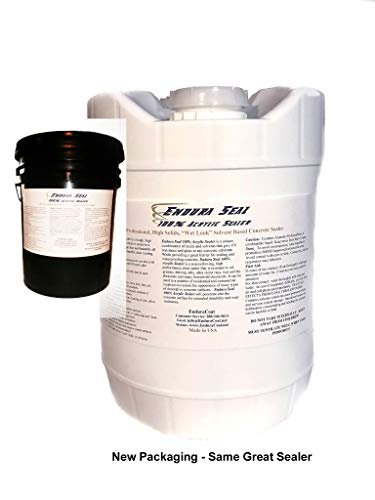
EnduraSeal 100% Acrylic 5-Gallon Concrete Sealer
The EnduraSeal 100% Acrylic Concrete Sealer is another option for homeowners who want to enhance decorative concrete surfaces.
This solvent-based acrylic sealer produces a semi-gloss wet-look finish that can improve the appearance of colored, stamped, and exposed aggregate concrete.
Its acrylic formulation creates a surface coating that helps resist moisture, dirt, and common stains. The non-yellowing characteristics also make it suitable for applications where maintaining the concrete’s appearance is important.
If you prefer a darker decorative finish, you can learn more about wet-look concrete sealers and their differences.
 Check Price
Coverage varies depending on the surface’s porosity, texture, and application method. Some product specifications indicate approximately 150 to 300 square feet per gallon per coat, but always confirm the coverage listed for the exact container.
Apply thin, even coats using the recommended roller or sprayer. Avoid excessive application because thick acrylic coatings may dry unevenly or become cloudy.
This product is useful for decorative concrete surfaces where appearance and routine maintenance are priorities.
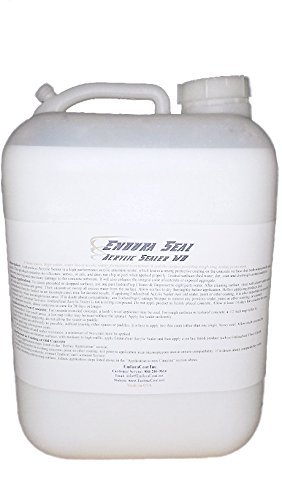
EnduraSeal Acrylic Semi-Gloss Sealer
For homeowners who prefer a semi-gloss finish, the EnduraSeal Acrylic Semi-Gloss Sealer is another product worth considering.
This acrylic coating is designed to enhance decorative concrete while providing protection against water and everyday surface contamination.
Its wet-look appearance works particularly well on exposed aggregate, decorative patios, and appropriately prepared concrete surfaces.
The sealer is relatively straightforward to apply with compatible equipment. However, proper preparation is essential because dirt, moisture, or an incompatible existing coating can interfere with adhesion.
 Check Price
Depending on the product version and surface, approximate coverage may range from 200 to 400 square feet per gallon. Highly porous concrete can require more material.
The sealer helps reduce surface staining from oil, grease, and other contaminants, but spills should still be cleaned promptly.
For the best results, follow the manufacturer’s application instructions and allow the recommended time before reopening the surface to traffic.
Foundation Armor AG Brown Seal 25 Tinted Sealer
The Foundation Armor AG Brown Seal 25 is designed for homeowners who want to enhance the color of exposed aggregate concrete or other compatible decorative surfaces.
Unlike clear sealers, this tinted concrete sealer adds a semi-transparent brown appearance while helping protect the surface.
Its decorative finish can make exposed aggregate look richer and more attractive. The coating also helps reduce water absorption and surface wear.
Because tinted sealers can significantly change the appearance of concrete, always test the product on a small, inconspicuous area before sealing the entire surface.
 Check Price
Coverage depends on concrete texture, porosity, and the number of coats applied. Exposed aggregate often absorbs more sealer than a smooth concrete surface.
For uniform coloring, apply the product evenly with the recommended equipment and maintain a consistent application rate.
Keep in mind that tinted coatings require maintenance. Recoating intervals depend on traffic, exposure, and the condition of the existing film.
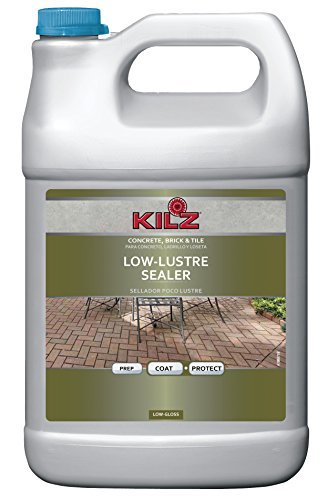
KILZ Interior/Exterior Concrete Sealer
The KILZ Interior/Exterior Concrete & Masonry Sealer is a practical choice for homeowners looking for an acrylic coating with a low-gloss finish.
It is designed for various properly prepared masonry surfaces, including concrete, brick, stucco, and stone.
The clear acrylic formulation helps protect the surface while maintaining much of its original appearance. However, some surfaces may darken slightly after application.
One advantage of this sealer is its versatility. It can be used on suitable interior and exterior surfaces, although the manufacturer does not recommend every application, particularly certain high-moisture locations.
 Check Price
A one-gallon container may cover approximately 250 to 400 square feet, depending on the surface and application conditions.
Under suitable conditions, the coating can dry to the touch in about one hour, with recoating possible after approximately four hours. However, drying to the touch does not mean the surface is ready for foot or vehicle traffic.
Always follow the latest instructions on the product label for curing, recoating, and surface use.
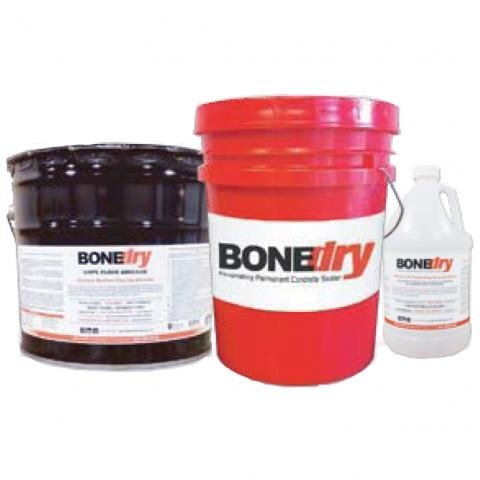
Bone Dry Original 5-Gallon Sealer
If moisture control is your main concern, the Bone Dry Original Concrete Sealer is another product to consider.
Bone Dry Original is designed for appropriate concrete and masonry applications where reducing moisture movement and surface dusting is important.
Unlike decorative acrylic sealers, products in this category are generally selected for functional protection rather than a glossy finish.
It may be suitable for properly prepared concrete floors, including certain residential and commercial applications. However, you should confirm compatibility with your particular concrete slab, moisture conditions, and any flooring or coating that will be installed afterward.
 Check Price
Some product descriptions indicate coverage of approximately 220 square feet per gallon, but actual requirements depend on concrete porosity and the manufacturer’s application method.
Do not assume a concrete sealer can solve all basement moisture problems. Hydrostatic pressure, active leaks, and significant moisture vapor transmission may require additional repairs or a specialized moisture mitigation system.
Wear appropriate protective equipment during application, avoid inhaling spray mist, and follow the product’s safety instructions.
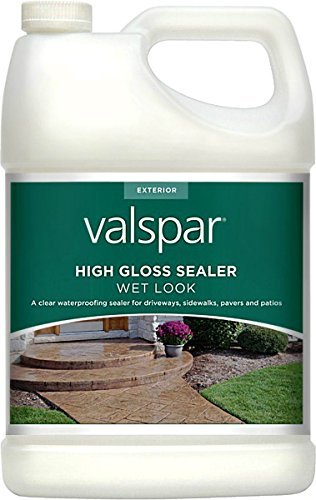
Valspar 24-82390 Gallon High-Gloss Sealer
The Valspar Concrete Sealer is another option for homeowners who prefer a glossy finish on compatible exterior masonry surfaces.
This type of water-based acrylic sealer creates a protective film that enhances the appearance of concrete and selected masonry materials.
It may be useful for decorative patios, walkways, and other suitable surfaces where a glossy finish is desired.
However, glossy coatings require careful application, especially outdoors. Excess moisture, thick coats, and unsuitable weather can cause cloudiness or whitening.
 Check Price
Coverage may be approximately 200 to 400 square feet per gallon, depending on the porosity and texture of the surface. Check the specifications for the exact product before purchasing.
Some users have reported whitening or cloudy patches after application. This can occur when moisture becomes trapped beneath a coating or when the product is applied incorrectly.
For more options with a reflective finish, compare the products in our high-gloss concrete sealer guide.
Rust-Oleum 251283 Concrete Acrylic Floor Sealer
Rust-Oleum offers several concrete floor coatings and sealers designed for residential and commercial applications.
The Rust-Oleum 251283 acrylic floor sealer is associated with protecting appropriate concrete floor surfaces and compatible coatings.
Depending on the exact formulation, an acrylic floor sealer can provide a clear protective finish that helps reduce staining and simplifies routine maintenance.
Before buying, make sure the selected product is suitable for your intended surface. A garage floor coating or topcoat is not automatically appropriate for an exterior driveway.
 Check Price
Important: The linked Rust-Oleum product is identified as a concrete and garage floor topcoat, which may differ from the older 251283 acrylic floor sealer. Confirm the exact product name, finish, and compatibility before ordering.
Drying and vehicle traffic times vary significantly among Rust-Oleum products. Some coatings dry quickly but require much longer before being exposed to tires, chemicals, or heavy use.
For more information about the brand’s concrete sealing options, read our Rust-Oleum concrete sealer review.
H&C Concrete Dustproofer Floor Sealer
The H&C Concrete Sealer range includes products designed to protect and improve the appearance of concrete and masonry surfaces.
Concrete dustproofers are particularly useful for reducing surface dust caused by abrasion or weak, powdery concrete.
Depending on the specific H&C formulation, these products may also provide resistance to water penetration and everyday staining.
However, H&C offers several different products, so it is important to distinguish between dustproofers, decorative sealers, and protective concrete coatings.
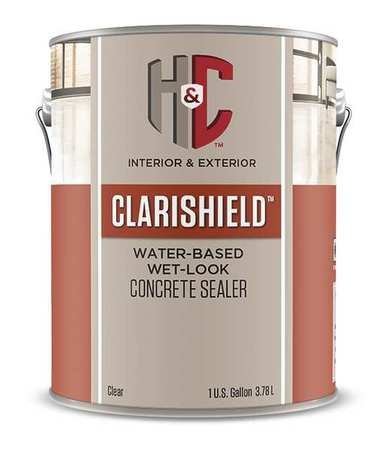 Check Price
Important: The linked Amazon listing is for a concrete quick-patch repair product rather than a confirmed H&C dustproofer. Check the product listing carefully before purchasing.
For an actual H&C concrete dustproofer, application temperatures, coverage, drying times, and recoating requirements depend on the exact formula.
Clean the concrete thoroughly before applying the product, and follow the manufacturer’s technical data sheet. Some dustproofing treatments are intended to retain a natural appearance, while decorative coatings may change the surface color or sheen.
Tuff Duck Concrete Countertop Sealer
Tuff Duck is designed for homeowners who want to protect concrete countertops and similar indoor surfaces from moisture and everyday stains.
Unlike driveway sealers, countertop products must be selected with kitchen use and surface contact requirements in mind.
Tuff Duck countertop sealer is associated with a water-based formulation that provides a protective finish without dramatically changing the appearance of the concrete.
Properly applied countertop sealers can help reduce staining from water, cooking oils, and food spills. However, no concrete countertop sealer is completely resistant to every acid, stain, or cleaning chemical.
 Check Price
Important: The linked listing identifies a GlobMarble XS-327 countertop sealer rather than a confirmed Tuff Duck product. These products should not be treated as identical.
Some Tuff Duck product descriptions indicate that a 750 ml container can cover approximately 45 to 60 square feet, depending on surface porosity and the number of coats.
Before sealing a kitchen countertop, verify that the exact product is suitable for the intended food-contact application and allow it to cure completely according to the manufacturer’s directions.
Never assume a product is food-safe simply because it is water-based or described as non-toxic.
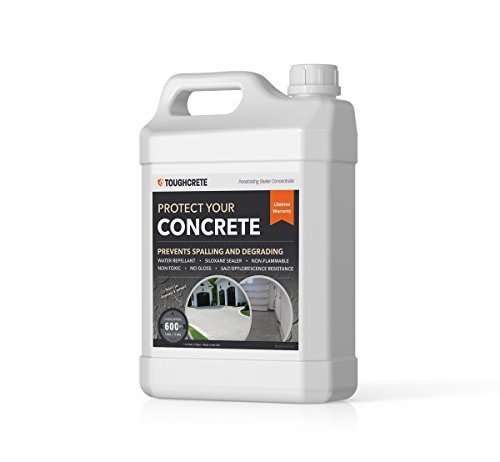
ToughCrete 1-Gallon Concrete Sealer
ToughCrete is a penetrating concrete sealer designed for homeowners who want moisture protection without adding a glossy coating.
Its silane/siloxane-based formulation is intended to penetrate the concrete and help reduce water absorption.
This makes it useful for suitable exterior concrete surfaces such as driveways, sidewalks, patios, and walkways.
Unlike acrylic coatings, a penetrating silane/siloxane sealer generally maintains the natural appearance and texture of the surface.
It can also help reduce damage associated with water penetration, deicing salts, and repeated freeze-thaw cycles.
 Check Price
Some ToughCrete product descriptions advertise coverage of up to 600 square feet per gallon and long-term protection claims. Actual coverage and service life depend on concrete porosity, weather conditions, surface preparation, and application quality.
Although penetrating sealers can last longer than many decorative acrylic coatings, protection is not guaranteed for a specific number of years under every condition.
If maintaining a natural concrete appearance is more important than achieving a wet look, ToughCrete is worth comparing with other penetrating products.
KILZ Interior/Exterior Concrete Low-Gloss Sealer
The KILZ Concrete & Masonry Low-Lustre Sealer is designed to protect and improve the appearance of suitable concrete and masonry surfaces.
Its acrylic formulation creates a clear protective coating with a subtle sheen. It can be used on various properly prepared surfaces, including concrete, brick, stucco, and masonry.
The low-gloss appearance makes it appealing to homeowners who want some surface enhancement without the reflective finish of a high-gloss sealer.
It is important to check the surface and application restrictions because not every indoor or outdoor location is suitable for this type of coating.
 Check Price
One gallon typically covers approximately 250 to 400 square feet, depending on the surface.
It can be applied using the equipment recommended on the label. Under suitable conditions, it may dry to the touch within approximately one hour and be ready for recoating after four hours.
However, the final curing time can be longer. Avoid exposing freshly sealed surfaces to moisture, heavy traffic, or other demanding conditions before the coating has cured sufficiently.
This product is another option for homeowners seeking a clear acrylic masonry finish rather than a penetrating water repellent.
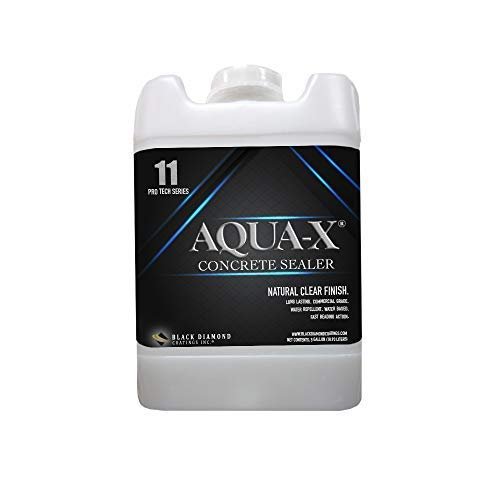
AQUA-X 11 Commercial-Grade Concrete Penetrating Sealer
The AQUA-X 11 penetrating sealer from Black Diamond Coatings is an excellent option to consider when you want concrete protection without changing the surface’s natural appearance.
This water-based penetrating sealer helps repel water and reduce moisture-related deterioration.
It is intended for compatible concrete and stone surfaces, including driveways, patios, sidewalks, and selected masonry applications.
Because it does not create a decorative glossy coating, AQUA-X 11 is suitable for homeowners who prefer a natural finish.
 Check Price
According to Black Diamond Coatings, AQUA-X 11 coverage on concrete is approximately 100 to 400 square feet per gallon, depending on surface porosity. Certain stone surfaces can provide higher coverage.
Proper surface preparation is important. The manufacturer recommends checking surface porosity and ensuring suitable weather conditions before applying the sealer.
The product instructions also recommend maintaining temperatures above 50°F for the specified period before and after application.
AQUA-X 11 is particularly useful for homeowners concerned about water absorption, freeze-thaw deterioration, and preserving the original concrete appearance.
PS101 Siliconate Penetrating Sealer
The PS101 Siliconate Penetrating Sealer is designed for appropriate concrete and masonry applications where a natural appearance and moisture resistance are important.
Unlike film-forming acrylic sealers, siliconate-based products react within suitable concrete substrates to create water-repellent properties.
This type of penetrating concrete sealer can be useful for driveways, patios, walkways, garage floors, and selected commercial concrete surfaces.
It can help reduce water absorption, surface dusting, and certain moisture-related problems when applied to a compatible substrate.
Because it does not create a thick decorative film, the surface generally retains its original appearance.
However, siliconate sealers are not suitable for every type of concrete or masonry. Some formulations work best on dense, machine-troweled concrete, while others require specific substrate conditions.
Before using PS101, check the current technical data sheet to confirm whether it is recommended for your concrete’s age, porosity, finish, and condition.
For homeowners who want invisible protection instead of a glossy finish, PS101 may be an appropriate option when the concrete meets the manufacturer’s requirements.
How to Choose the Best Concrete Sealer for Your Project
Choosing the best concrete sealer becomes easier when you focus on the surface you need to protect and the results you expect.
| Project | Recommended Sealer Type | Main Benefit |
|---|---|---|
| Concrete driveway | Silane/siloxane penetrating sealer | Water and deicing salt resistance |
| Stamped concrete patio | Compatible acrylic sealer | Color enhancement and surface protection |
| Garage floor | Suitable epoxy or polyurethane coating | Abrasion and chemical resistance |
| Decorative concrete | Acrylic or compatible decorative coating | Improved appearance |
| Concrete countertop | Countertop-specific protective sealer | Stain resistance and easier cleaning |
| Exterior walkway | Natural-look penetrating sealer | Moisture protection without a glossy film |
Besides choosing the correct type, consider the condition of your concrete, the local climate, and whether the surface has been sealed before.
Compatibility is particularly important when applying a new sealer over an existing coating. Incompatible products can peel, discolor, or fail to bond properly.
How to Properly Apply Concrete Sealer
Applying concrete sealer is relatively straightforward, but preparation makes a significant difference. Even an expensive sealer can fail if applied over dirt, oil, excessive moisture, or an incompatible coating.
You may need a broom, concrete cleaner, degreaser, scrub brush, crack filler, putty knife, paint roller, sprayer, protective equipment, and the selected sealer.
- Clear the surface: Remove furniture, vehicles, flowerpots, and other objects from the concrete area.
- Protect nearby materials: Cover walls, plants, doors, and other surfaces that should not come into contact with the sealer.
- Remove dirt and debris: Sweep thoroughly to eliminate dust, leaves, and loose particles.
- Clean oil and grease stains: Use a compatible concrete degreaser and scrub the affected areas. If your driveway has stubborn stains, follow our guide on removing oil stains from a driveway.
- Rinse and allow the concrete to dry: Remove cleaning residue and follow the sealer manufacturer’s moisture requirements. Some penetrating sealers have different moisture tolerances from film-forming coatings.
- Repair cracks and damaged areas: Fill suitable nonstructural cracks using a compatible concrete repair product. Allow the repair material to cure according to its instructions. Structural damage may require professional assessment.
- Check the weather: Avoid sealing when rain, extreme temperatures, strong winds, or excessive humidity could interfere with application or curing.
- Test a small area: Apply the sealer to an inconspicuous section to check the finish and compatibility.
- Apply the first coat: Use the recommended sprayer, roller, or brush. Maintain an even application rate and avoid puddles or excessive buildup.
- Follow the recoating instructions: Some sealers require a second coat after the first dries, while certain penetrating products use a wet-on-wet application method.
- Allow adequate curing time: Keep foot traffic, vehicles, and moisture away until the manufacturer says the surface is ready.
If you prefer applying a coating with a roller, our guide to sealing a driveway with a roller explains important preparation and application considerations.
Common Concrete Sealing Mistakes to Avoid
Many concrete sealing problems happen because of poor preparation or incorrect application rather than the sealer itself.
- Applying too much sealer: Excess material can create uneven drying, bubbles, and cloudy patches.
- Sealing damp concrete: Trapped moisture can cause whitening, blistering, or coating failure.
- Ignoring existing coatings: A new sealer may not bond properly to an incompatible old finish.
- Using the wrong product: A decorative patio sealer may not withstand garage floor chemicals or vehicle traffic.
- Sealing in extreme weather: High or low temperatures can affect drying, penetration, and curing.
- Skipping surface repairs: Sealers cannot repair structural cracks, settlement, or damaged concrete.
- Returning to traffic too early: Fresh coatings need adequate curing time before handling heavy use.
Following the manufacturer’s instructions is the best way to avoid these problems and achieve consistent results.
Conclusion
With so many products available, choosing the best concrete sealer requires understanding your surface and the type of protection you need.
For exterior concrete driveways exposed to rain, snow, and deicing salts, a quality silane/siloxane penetrating sealer is often a practical choice. If you prefer a decorative wet-look finish, an acrylic product such as Foundation Armor AR350 may be more suitable.
For garage floors, an appropriate epoxy or polyurethane coating may provide better abrasion and chemical resistance. Countertops and other specialized surfaces require products designed for their specific applications.
Whatever sealer you choose, proper cleaning, surface preparation, and application are essential. A quality sealer can help your concrete maintain its appearance and resist everyday deterioration, but regular inspection and maintenance are still necessary.
FAQs: Best Concrete Sealer
How long does a quality concrete driveway sealer last?
The lifespan depends on the type of sealer, traffic, weather exposure, and maintenance. Many acrylic film-forming sealers require attention or recoating after approximately 1 to 3 years, while certain penetrating sealers can remain effective for several years or longer. Always follow the manufacturer’s recommended maintenance schedule.
Which is better for concrete: acrylic or epoxy sealer?
Both have advantages. Acrylic sealers are generally easier to apply and are commonly used for decorative concrete and suitable outdoor surfaces. Epoxy coatings typically provide stronger abrasion and chemical resistance, making them popular for indoor garage and workshop floors. Standard epoxy is usually not the best choice for prolonged outdoor UV exposure.
What is the best concrete sealer for a driveway?
For a driveway where natural appearance and moisture protection are the priorities, a suitable silane/siloxane penetrating sealer is often a good choice. If you want a glossy or wet-look finish, a compatible exterior acrylic sealer may be preferable.
Which concrete sealer works best in cold or warm climates?
In colder climates, silane/siloxane penetrating sealers are popular because they help reduce water absorption and chloride penetration. In warmer climates, both penetrating and UV-resistant acrylic sealers may work well, depending on the desired finish and surface conditions.
What happens if I apply concrete sealer when it is too hot or too cold?
Extreme temperatures can interfere with application and curing. High temperatures may cause certain coatings to dry too quickly, while low temperatures can slow curing or prevent proper film formation. Many products specify application temperatures around 50°F to 90°F, but the acceptable range varies. Always follow the temperature limits on the label and consider the concrete’s surface temperature, not just the air temperature.
Should I use a penetrating or film-forming concrete sealer?
Choose a penetrating sealer if you want water repellency without changing the concrete’s natural appearance. A film-forming sealer may be better if you want enhanced color, gloss, or a protective coating against certain stains. The right choice depends on the surface and its intended use.
Can I apply new concrete sealer over an old sealer?
Sometimes, but compatibility is essential. Certain acrylic sealers can be recoated with a compatible product after cleaning and preparation. Other coatings may require stripping or mechanical removal before a different sealer can be applied. Always test a small area and check the manufacturer’s requirements.
How many coats of concrete sealer should I apply?
Many concrete sealers require one or two coats, but the correct number depends on the formulation and surface porosity. Some penetrating sealers use a wet-on-wet application process, while acrylic coatings may require separate drying periods. Applying extra coats beyond the recommended amount can create problems.
How long should I wait before driving on sealed concrete?
The required waiting period varies by product. Some sealers allow vehicle traffic after approximately 24 to 48 hours, while others need several days to cure fully. Do not drive on the surface until the manufacturer specifically permits vehicle traffic.
Does sealing concrete prevent cracks?
Concrete sealer can help reduce moisture penetration and certain types of weather-related surface damage, but it cannot prevent every crack. Settlement, shrinkage, structural movement, and improper installation can still cause cracking. Existing cracks should be assessed and repaired as necessary before sealing.
what type of sealer,film forming or penatrating sealer is best to use if you are planning to fill pop outs or resurface drive and do not want to have to strip off sealer to so,Thanks
I live in Wisconsin and my stamped concrete patio incurred isolated salt damage that “ate away” the stamped surface in a few small areas thereby exposing some of the pebble base below the stamped surface. I would like to coat my entire patio and am pondering between the Armor AR350 and Endura Seal 100% Acrylic which would be better choice. I don’t know if this makes a difference but the patio also has a southern exposure.